“coffee planting belt” search results (700)

The editor introduces the growth habits of coffee.
Coffee trees like mild temperatures during the day and less than two hours of direct sunshine, so if there is a lack of afternoon showers or fog to report every day, local farmers have to plant many taller trees in the coffee garden for shade. At night, they want an environment of about ten degrees Celsius but not too low, because too warm will make the coffee berries grow
2014-07-14 Coffee knowledge coffee growth growth habits coffee encyclopedia
Coffee trees are evergreen shrubs or trees belonging to Rubiaceae.
Coffee trees are evergreen shrubs or trees belonging to the Rubiaceae family. Wild coffee trees can grow to a height of 5 to 10 meters, but coffee trees planted in the manor are often cut to a height of less than 2 meters in order to increase fruit and facilitate harvesting. The opposite leaf of the coffee tree is long oval, the leaf surface is smooth, the end branch is very long, the branch is few, and the flower is white, opening at the base of the petiole connecting the branch.
2015-09-23 Coffee belonging to Grass Family evergreen shrubs trees
Introduction to the Development History of cultivation and planting techniques for Coffee seedlings
Coffee planting technology introduces the origin of coffee trees in Ethiopia in Africa. In botany, coffee trees belong to the evergreen trees of the subgenus Rubiaceae, and coffee beans, commonly known as coffee beans, are the seeds of the fruit of coffee trees, just because they are shaped like beans, so they are called coffee beans. Climate is the decisive factor for coffee cultivation, and coffee trees are only suitable for growing in the tropics or subtropics.
2016-10-19 Coffee saplings how cultivation planting technology development history introduction coffee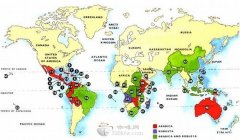
Coffee beans grow at the center of the equator
Coffee beans grow in tropical or subtropical agricultural gardens around the equator, called coffee belts, and travel to Japan with ships. When the brown coffee beans appear in front of your eyes, they have actually gone through a variety of different circulation processes and the hands of many people.
2014-08-19 Coffee knowledge coffee bean growth coffee belt equatorial growth
Introduction of Los Congo Manor Coffee Flavor producing area like the faint taste in wine
Managua, the capital of Nicaragua, is located in the west of the border, on the south bank of Lake Managua, hence its name. The northwest is 140 kilometers away from the Collinto seaport on the Pacific coast. 55 meters above sea level. It is a Spanish city with beautiful scenery. Because it is located to the east of the Pacific volcanic active seismic belt, there have been four strong earthquakes in the city in the past 100 years, including one in December 1972.
2016-09-18 Like wine faint implication taste Los Congo manor coffee flavor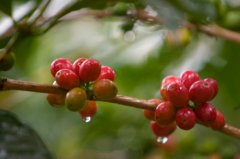
Understand that coffee trees are evergreen shrubs or trees belonging to Rubiaceae.
1 Coffee trees are evergreen shrubs or trees belonging to the Rubiaceae; wild coffee trees can grow to a height of 5 to 10 meters, but coffee trees planted in the manor are often cut to a height of less than 2 meters in order to increase fruit and facilitate harvesting. The opposite leaf of the coffee tree is long oval, the leaf surface is smooth, the end branch is very long, the branch is few, and the flower is white, opening on the petiole.
2015-06-05 Coffee belonging to the grass family evergreen shrubs trees coffee
Coffee trees are evergreen shrubs or trees belonging to Rubiaceae.
Coffee trees are evergreen shrubs or trees belonging to the Rubiaceae family. Wild coffee trees can grow to a height of 5 to 10 meters, but coffee trees planted in the manor are often cut to a height of less than 2 meters in order to increase fruit and facilitate harvesting. The opposite leaf of the coffee tree is long oval, the leaf surface is smooth, the end branch is very long, the branch is few, and the flower is white, opening at the base of the petiole connecting the branch.
2015-06-05 Coffee belonging to Grass Family evergreen shrubs trees
The bitter Coffee Flavor of Nicaraguan Heavenly Manor Coffee Flavor and Taste production area
Nicaragua is located in central Central America, bordered by the Pacific Ocean to the west and the Caribbean Sea to the east. The highlands in the north and the coastal plains in the east are part of the Central American volcanic belt. The eastern plain is high-temperature and rainy, with a tropical maritime climate. The suitable climate provides an excellent growth environment for the cultivation of coffee. High-quality Nicaraguan coffee, grown in the north and middle of the country. Coffee is Ni.
2016-09-08 Huigan bitter Nicaragua Divine Gift Manor Coffee Flavor Taste producing area Special
The forming Environment of Coffee trees
In botany, coffee trees belong to the evergreen trees of the subgenus Rubiaceae, and coffee beans, commonly known as coffee beans, are actually the seeds of the fruit of coffee trees, just because they are shaped like beans. Climate is the decisive factor for coffee cultivation. Coffee trees are only suitable for growing in the tropics or subtropics, so the zone between latitude 25 degrees south and north is generally called coffee belt or coffee area.
2015-07-30 Coffee generation environment boutique coffee botany belong to grass family subgenus evergreen
Coffee tree history coffee morphological characteristics coffee cultivation techniques
Coffee tree is a shrub or small tree of Rubiaceae; leaves opposite, leathery, long oval; every March, branches will emerge white flowers, petals spiral arrangement, flower center around the petals jump, a closer look, really like childhood play with the small windmill, issued bursts of jasmine fragrance; fruit is oval, berry, dark red, hidden two seeds, that is, we are familiar with coffee
2016-05-26 coffee history morphological characteristics cultivation techniques
Coffee knowledge the generating environment of coffee trees
In botany, coffee trees belong to the evergreen trees of the subgenus Rubiaceae, and coffee beans, commonly known as coffee beans, are actually the seeds of the fruit of coffee trees, just because they are shaped like beans. Climate is the decisive factor for coffee cultivation. Coffee trees are only suitable for growing in the tropics or subtropics, so the zone between latitude 25 degrees south and north is generally called coffee belt or coffee area.
2014-09-16 Coffee knowledge coffee tree coffee tree growth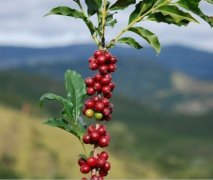
Fine Coffee study the forming Environment of Coffee trees
In botany, coffee trees belong to the evergreen trees of the subgenus Rubiaceae, and coffee beans, commonly known as coffee beans, are actually the seeds of the fruit of coffee trees, just because they are shaped like beans. Climate is the decisive factor for coffee cultivation. Coffee trees are only suitable for growing in the tropics or subtropics, so the zone between latitude 25 degrees south and north is generally called coffee belt or coffee area.
2015-01-07 Boutique Coffee Generation Environment Botany belonging to Grass Family subgenus Evergreen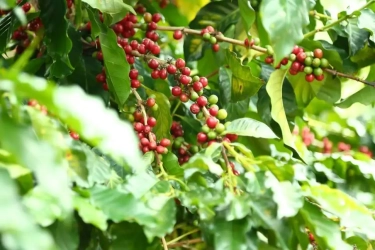
What are Arabica coffee beans? 100% pure Arabica single boutique coffee beans efficacy, flavor and taste characteristics
Arabica coffee beans are also one of the coffee beans, but account for 70% and 80% of coffee bean production. It can be seen that Arabica coffee beans are the main source of raw materials for coffee. So what is Arakabi? What kind of nutrition does it have? What's the use? How does it make coffee? If you eat it
2023-03-15 Rabbi coffee beans what is efficacy belongs to one of them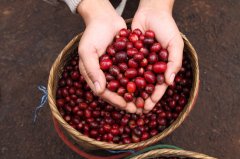
Where is the best place to grow coffee in the coffee growing area?
The coffee belt (coffee production zone) ranges from 25 degrees north latitude to 30 degrees south latitude, including many countries in Central, West Africa, the Middle East and South Asia, the Pacific, Latin America and the Caribbean. The reason why coffee cultivation is concentrated in this area is due to the limitation of temperature. Coffee trees are very vulnerable to frost, neither the north nor the south latitude is suitable, but only in the tropics.
2016-05-03 Coffee planting production zone where suitable coffee medium
Major Coffee producing areas in the World (1)
Coffee production zones (commonly known as coffee belts) range from 25 degrees north latitude to 30 degrees south latitude, covering many countries in Central, West Africa, the Middle East and South Asia, the Pacific, Latin America and the Caribbean. The reason why coffee cultivation is concentrated in this area is mainly due to the limitation of temperature. Because coffee trees are vulnerable to frost, neither north nor south latitude is suitable, especially in the tropics.
2014-08-14 Coffee producing area world coffee producing area coffee encyclopedia
Hawaiian Kona Coffee, the world's top boutique coffee.
Hawaii has made the Arabica seed into the world's top boutique coffee. Hawaii Kona = excellent Arabica species + coffee suitable planting belt + Hawaii dark volcanic ash soil + marine monsoon climate + 150 m to 750 m above sea level, across latitudes 19-22 degrees, south of the Tropic of Cancer, the Hawaiian Islands, blown by the monsoon, is a perfect coffee species.
2014-10-17 Coffee knowledge Hawaiian coffee Kona coffee boutique coffee
The growth habits of coffee the distribution of coffee the three main types of coffee
Coffee trees grow in national farms in tropical or subtropical regions known as coffee belts centered at the equator and between latitudes of 25 degrees south and north. At present, coffee is produced in more than 60 countries, widely distributed in South America, Central America, the West Indies, Asia, Africa, Arabia, the South Pacific and Oceania. In terms of output, Brazil, which accounts for the first place in the world, accounts for about 30%; the second
2016-05-25 Coffee growth habit distribution three major species coffee tree growing equator
Introduction to the characteristics of Nicaraguan Fine Coffee Bean Flavor and taste Manor
Managua, the capital of Nicaragua, is located in the west of the border, on the south bank of Lake Managua, hence its name. The northwest is 140 kilometers away from the Collinto seaport on the Pacific coast. 55 meters above sea level. It is a Spanish city with beautiful scenery. Because it is located to the east of the Pacific volcanic active seismic belt, there have been four strong earthquakes in the city in the past 100 years, including one in December 1972.
2016-08-15 Nicaragua boutique coffee beans flavor taste manor producing area characteristics introduction
Raw beans of Jamaican coffee
The unique flavor of Blue Mountain Coffee is related to its geographical location and climatic conditions. Generally speaking, south of the Tropic of Cancer and north of the Tropic of Cancer, this area is suitable for growing coffee, called the coffee belt. Jamaica is just south of the Tropic of Cancer. The blue mountain is steep, the air is fresh, there is no pollution, it rains all the year round, and there is a great temperature difference between day and night, which has a unique and fertile new volcanic soil.
2014-09-01 Coffee knowledge Jamaican coffee blue mountain coffee beans coffee raw beans
Coffee trees and three kinds of native species
Coffee trees and three kinds of native coffee trees are evergreen shrubs or trees belonging to the Rubiaceae family. Wild coffee trees can grow to a height of 5 to 10 meters, but coffee trees planted on the manor are often cut to a height of less than 2 meters in order to increase fruit and facilitate harvesting. The opposite leaf of the coffee tree is long oval, the leaf surface is smooth, the end branch is very long, the branch is few, and the flower is white.
2014-09-11 Coffee trees coffee trees coffee knowledge